Protein powders have rapidly evolved from niche bodybuilding supplements to mainstream wellness products. Today, you’ll find protein added to everything—from shakes to snacks and even biscuits. But with so many options available, consumers are often confused: Which type is best? Which brand is trustworthy? And are labels really telling the truth?
Let’s break it down.
1. What Are Protein Powders?
Protein powders are concentrated forms of protein derived from animal or plant sources. Common sources include milk (whey and casein), eggs, and plants like peas, soy, and rice.
They are primarily used to:
• Meet daily protein requirements
• Support muscle growth and recovery
• Aid in weight management
A typical serving provides around 20–25 grams of protein, making it a convenient supplement when dietary intake is insufficient.
2. Types of Protein Powders in the Market
A. Whey Protein (Most Popular)
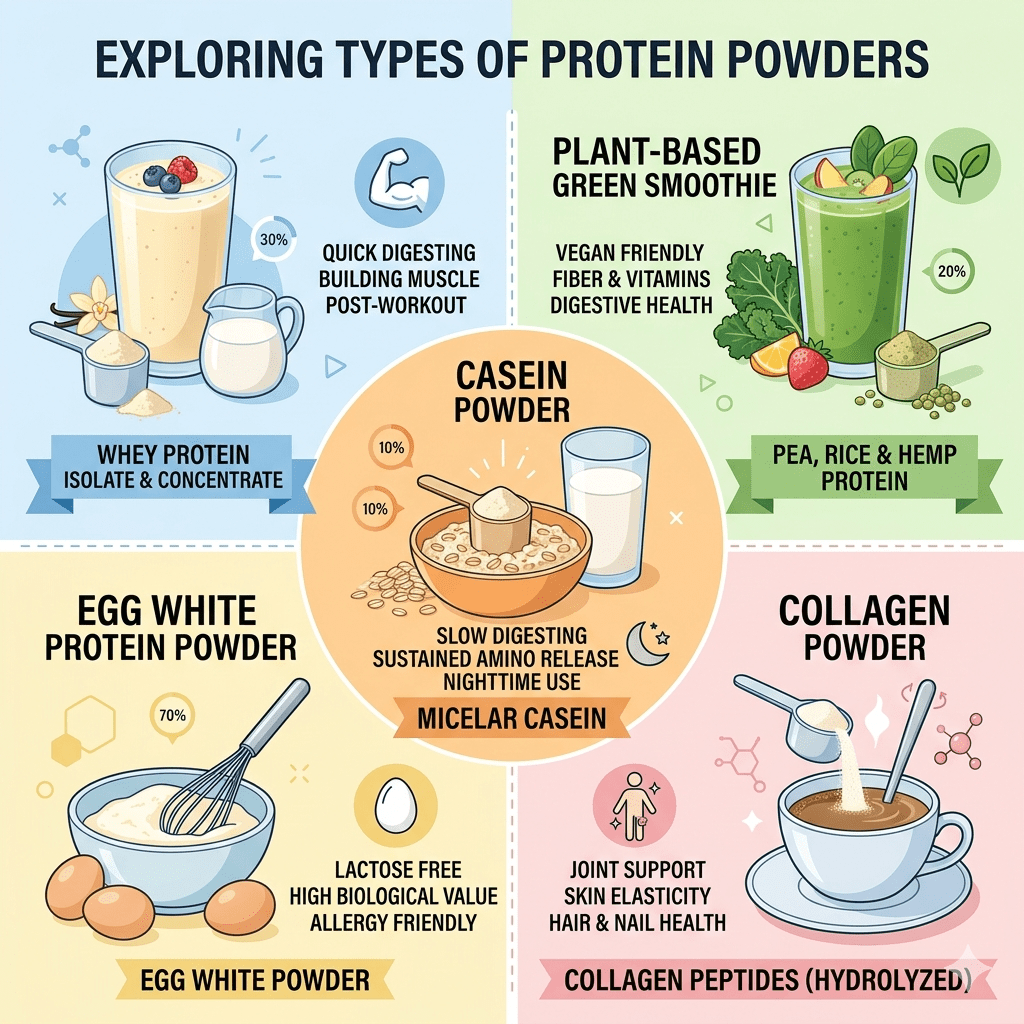
Whey protein is derived from milk and is considered a “complete protein” because it contains all essential amino acids.
Types of Whey:
• Concentrate (WPC): 70–80% protein, contains some fat and lactose
• Isolate (WPI): 90%+ protein, low lactose
• Hydrolysate (WPH): Pre-digested, fastest absorption
Whey is fast-digesting and ideal for post-workout recovery.
B. Casein Protein
Also derived from milk, casein is slow-digesting and releases amino acids gradually.
Best for:
• Night-time consumption
• Preventing muscle breakdown
C. Plant-Based Protein
Includes proteins from:
• Pea
• Rice
• Soy
• Hemp
Plant proteins are gaining popularity due to:
• Lactose-free nature
• Sustainability
• Better digestion for some individuals
However, not all plant proteins are “complete,” so blends are often used.
D. Egg White Protein
A dairy-free, complete protein source with high biological value.
E. Collagen Protein
Derived from animal connective tissues.
Important: It is not a complete protein, meaning it lacks some essential amino acids.
3. Popular Brands in the Market
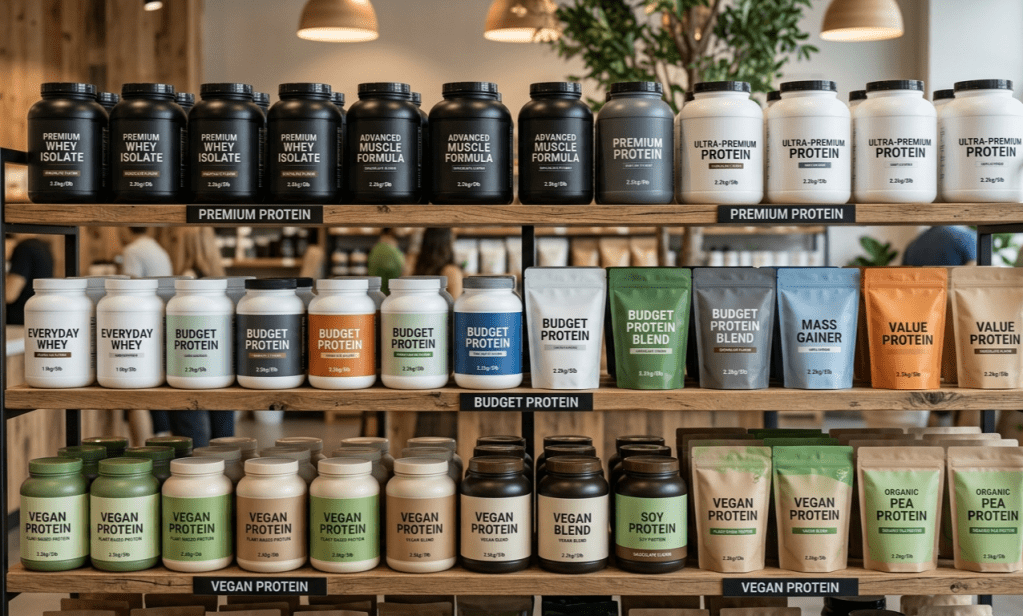
The protein supplement market is flooded with both international and Indian brands. Some widely known categories include:
• Premium whey brands – focus on purity and isolate formulas
• Budget blends – mix different protein sources
• Vegan brands – plant-based and eco-friendly
• Lifestyle brands – marketed for weight loss, skin, or general wellness
However, brand popularity does not always guarantee quality. Marketing plays a huge role in influencing consumer choices.
4. Understanding the Label: What You Should Check
This is where most consumers get misled.
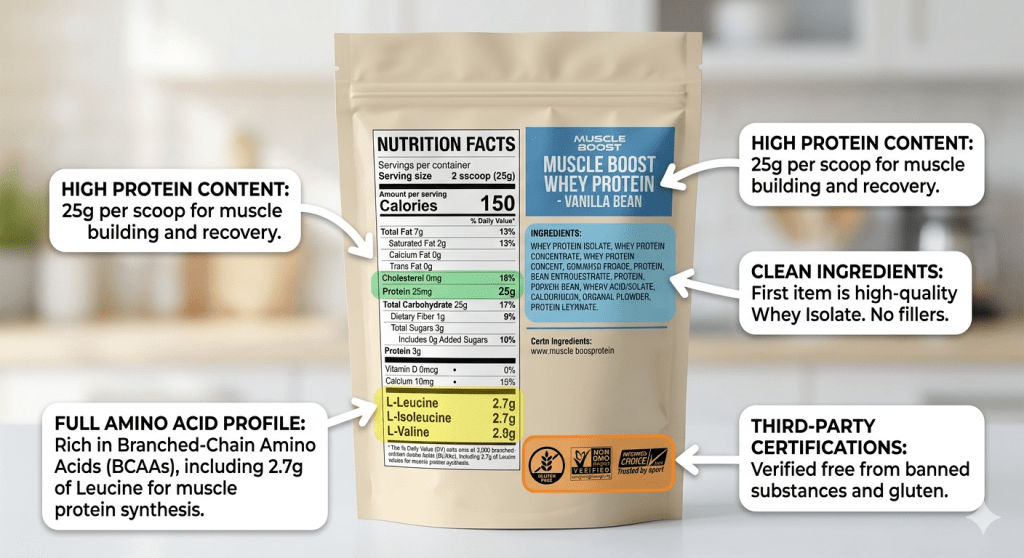
A. Protein Content per Scoop
A scoop may weigh 30g, but actual protein could be only 20g. The rest includes:
• Carbohydrates
• Fats
• Fillers
B. Ingredient List
Ingredients are listed in descending order. If sugar or fillers appear early, it’s a red flag.
Common additives:
• Artificial sweeteners
• Thickeners (xanthan gum)
• Flavoring agents
C. Amino Acid Profile
Look for:
• BCAAs (Branched Chain Amino Acids)
• Leucine content (important for muscle synthesis)
D. Certifications
Choose products with:
• Third-party testing
• Certifications like NSF or Informed Choice
This ensures safety and label accuracy.
5. The Truth Behind Labels
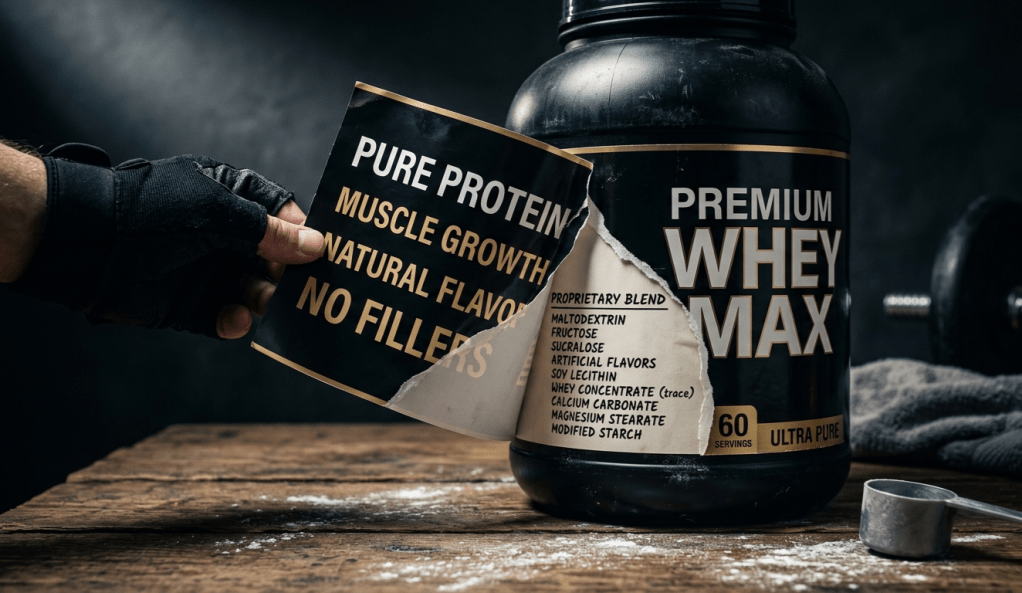
Here’s the reality many brands don’t openly discuss:
1. “Clean” Doesn’t Mean Regulated
Terms like clean, natural, or premium are marketing terms—not regulated standards.
2. Protein Spiking
Some brands inflate protein content by adding cheaper amino acids instead of complete protein.
3. Hidden Sugars and Fillers
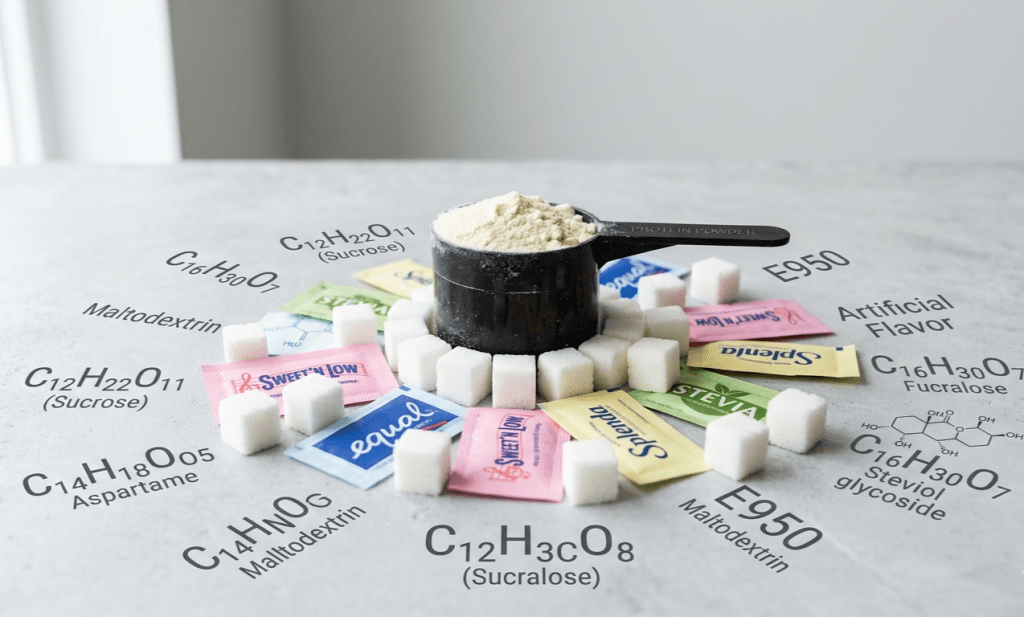
Even “healthy” protein powders may contain:
• Added sugars
• Sugar alcohols (can cause bloating)
• Excess carbs
4. Contamination Concerns
Studies have found traces of:
• Heavy metals (lead, arsenic)
• BPA
Though usually within safe limits, long-term overconsumption can be risky.
5. Misleading Nutrition Claims (Real Consumer Concern)
From online discussions:
“Protein might be slightly inflated… biggest red flag: cholesterol 0 mg with whey.”
This highlights how labels may not always reflect reality.
6. Are Protein Powders Necessary?
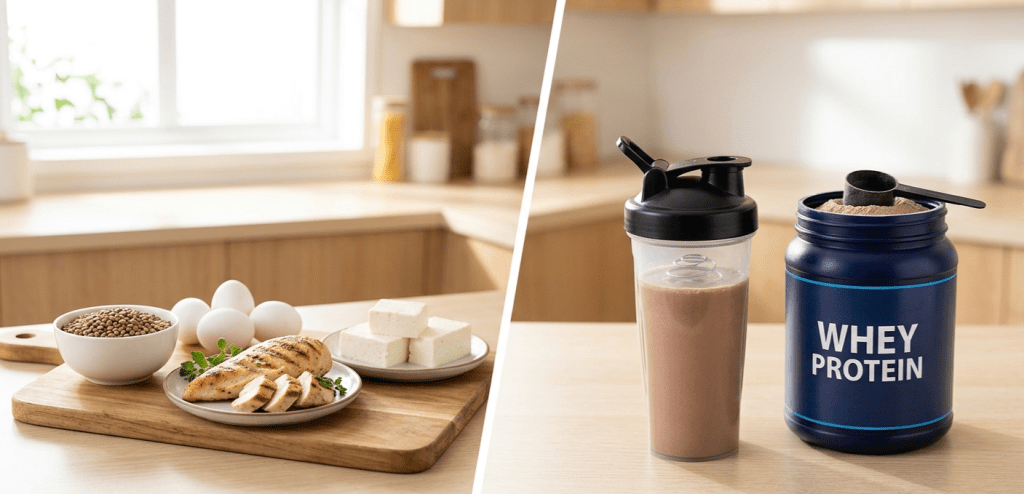
Not always.
Whole foods like:
• Eggs
• Chicken
• Dal
• Paneer
provide not just protein but also vitamins, minerals, and fiber.
Experts recommend using protein powder as a supplement, not a replacement.
7. How to Choose the Right Protein Powder
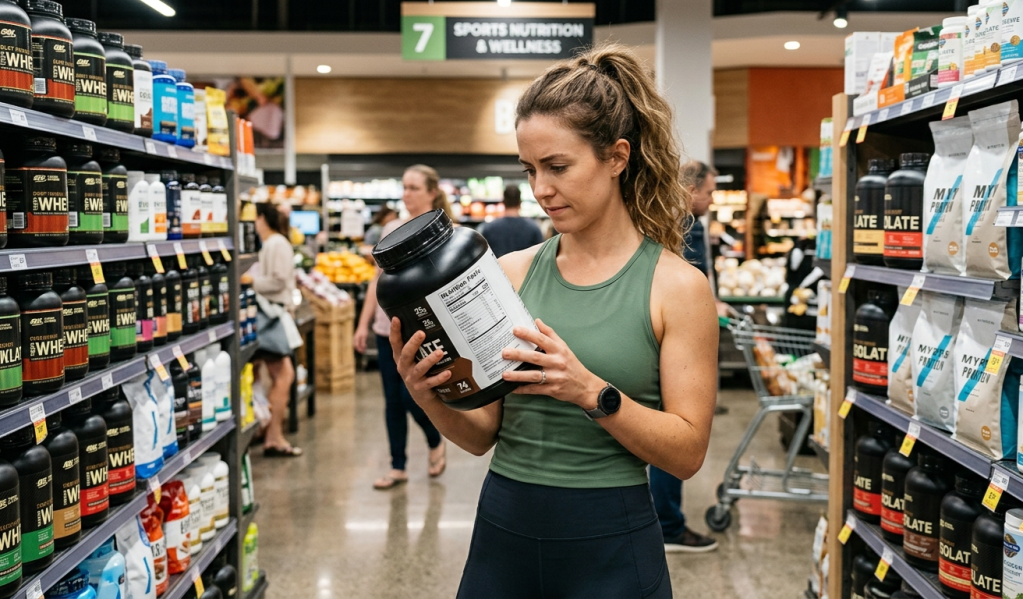
Here’s a simple checklist:
✔ Choose based on your goal
• Muscle gain → Whey
• Weight loss → Whey isolate / plant
• Vegan → Plant-based
✔ Check ingredients (shorter = better)
✔ Avoid high sugar content
✔ Look for third-party tested products
✔ Consider digestion (lactose intolerance, bloating, etc.)
Protein powders are neither magic nor harmful—they are tools.
• They can help you meet your protein needs
• They are convenient and effective
• But they are heavily marketed and sometimes misleading
The key is awareness.
Don’t fall for branding—understand the science, read the labels, and choose wisely.
The best protein powder is not the most expensive one—it’s the one that is transparent, suitable for your body, and complements your diet.
 Holistic Living with Dr.Deepti
Leave a comment