We live in a world of constant notifications, endless to-do lists, comparison culture, and information overload.
It’s no surprise that the mind starts feeling heavy, distracted, and overwhelmed.

Mental decluttering is not about “stopping thoughts.” It’s about organizing them. Just like your room, your phone gallery, or your study table — your mind also needs regular cleaning.
Here’s a practical, realistic guide to declutter your mind and create clarity, focus, and emotional balance.
1. Start With a Brain Dump
The first step to mental clarity is awareness.
Take a notebook and write down:
• Pending tasks
• Unfinished conversations
• Financial worries
• Academic pressure
• Content ideas
• Random fears
• Goals you keep thinking about
Don’t structure it. Don’t judge it. Just empty it.
When thoughts stay inside, they feel heavy. When they come out on paper, they become manageable.
This technique is often supported by productivity experts like David Allen, the creator of the “Getting Things Done” method, who emphasizes capturing everything outside your brain to reduce mental stress.
Your brain is for thinking — not for storing.
2. Identify Mental Clutter Categories
Not all thoughts are equal. Divide your brain dump into 4 categories:
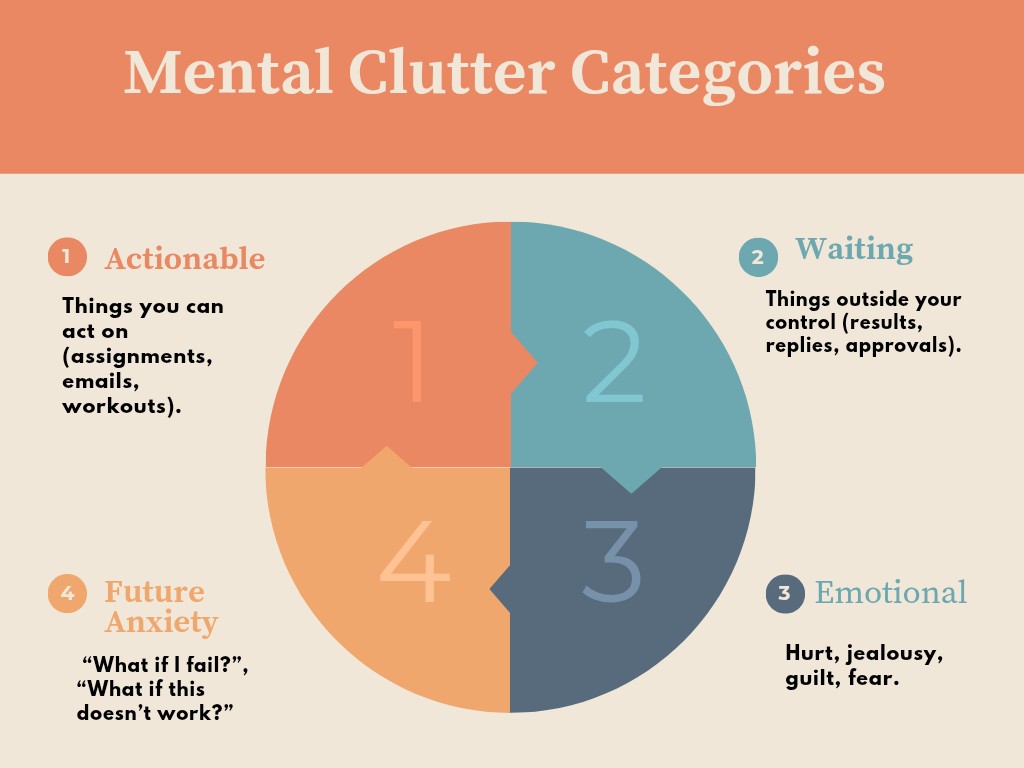
1. Actionable – Things you can act on (assignments, emails, workouts).
2. Waiting – Things outside your control (results, replies, approvals).
3. Emotional – Hurt, jealousy, guilt, fear.
4. Future Anxiety – “What if I fail?”, “What if this doesn’t work?”
This separation reduces confusion. Many times we feel stressed not because of workload — but because everything feels mixed up.
Clarity reduces emotional intensity.
3. Reduce Digital Overload
Your mind cannot be calm if your phone is chaotic.

Try this:
• Unfollow accounts that trigger comparison.
• Turn off non-essential notifications.
• Keep social media usage time-bound.
• Clean your photo gallery and notes app weekly.
Constant consumption blocks creativity. Space creates ideas.
4. Practice Structured Thinking
Overthinking happens when thoughts are circular.
Instead, use this formula:
Problem → Worst Case → Best Case → Most Likely Case → Action Step
For example:
• Problem: “What if my MBA career doesn’t work out?”
• Worst case: I take extra time to find my niche.
• Best case: I land a great healthcare management role.
• Most likely case: I start with internships and grow gradually.
• Action step: Improve skills + apply consistently.
This turns fear into planning.
5. Create Mental Boundaries

You cannot solve everyone’s problems.
Mental clutter increases when:
• You absorb others’ stress.
• You say yes to everything.
• You feel responsible for others’ emotions.
Learn to say:
• “I’ll think about it.”
• “Not right now.”
• “I need some time.”
Boundaries are not selfish — they are protective.
6. Release Emotional Baggage
Unprocessed emotions create the heaviest clutter.
Ask yourself:
• Am I holding onto resentment?
• Am I replaying an old mistake?
• Am I seeking validation from someone?
Write a forgiveness letter (you don’t have to send it). Talk it out. Cry if needed. Pray or meditate.
Psychiatrist Carl Jung once said, “Until you make the unconscious conscious, it will direct your life and you will call it fate.”
Face your emotions gently. Ignoring them keeps them louder.
7. Practice Mindfulness (5-Minute Rule)
You don’t need one-hour meditation sessions.
Start with 5 minutes:
• Sit quietly.
• Focus on your breathing.
• Notice thoughts.
• Don’t engage — just observe.
Apps like Headspace and Calm can help if you prefer guidance.
Mindfulness trains your brain to separate you from your thoughts.
You are not your thoughts. You are the observer of your thoughts.
8. Simplify Your Goals
Mental clutter often comes from too many ambitions at once.
You might want:
• Financial independence
• Fitness goals
• Career excellence
• Business startup
• Investing mastery
Ambition is beautiful. But scattered focus creates anxiety.
Pick:
• 1 Primary Goal (main focus)
• 2 Secondary Goals
• Maintain the rest
Focused growth is faster growth.
9. Create a Weekly Reset Ritual
Choose one day (Sunday evening works well).
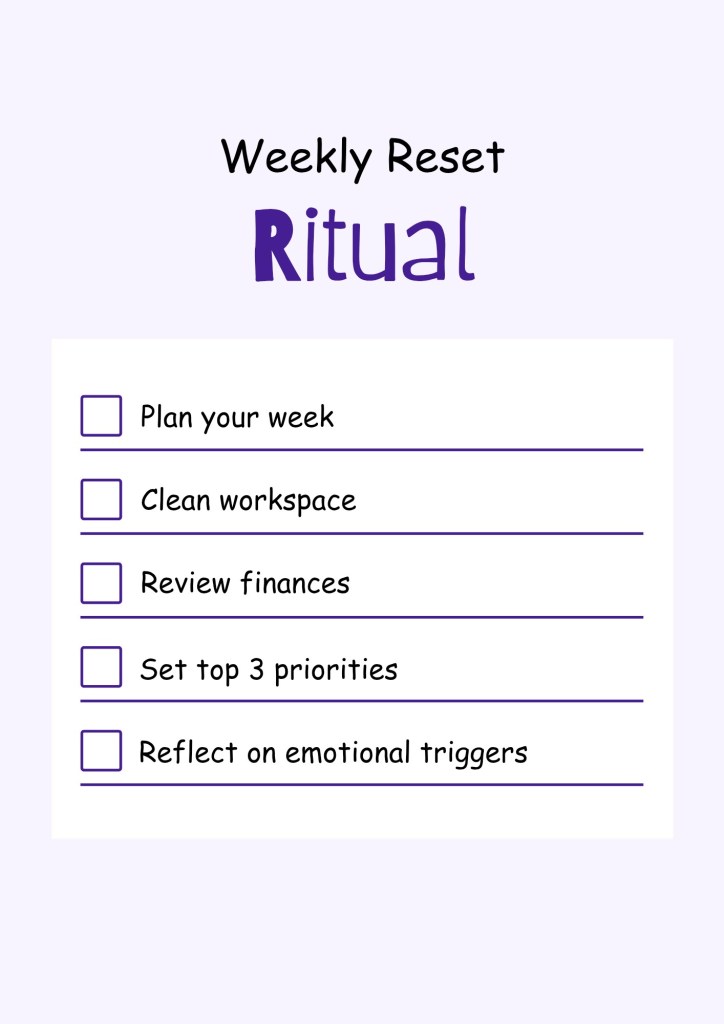
Do:
• Plan your week
• Clean workspace
• Review finances
• Set top 3 priorities
• Reflect on emotional triggers
This builds control and reduces Monday anxiety.
Consistency prevents mental buildup.
10. Move Your Body
Your mind and body are connected.
Exercise:
• Reduces stress hormones
• Improves mood
• Enhances clarity
Even 30 minutes of walking helps.
Movement clears stagnant energy — physically and mentally.
11. Declutter Your Physical Space
Outer clutter reflects inner clutter.
Clean:
• Study table
• Wardrobe
• Laptop desktop
• Email inbox
Minimal surroundings improve concentration.
If your room feels chaotic, your mind often follows.
12. Practice Thought Replacement
Whenever a negative thought appears, ask:
• Is this fact or assumption?
• What evidence supports this?
• What would I say to a friend in this situation?
Replace: “I’m behind in life”
With
“I’m building at my own pace.”
Your brain believes repeated narratives. Choose empowering ones.
13. Limit Information Intake
You don’t need:
• 20 self-help videos daily
• 50 investing strategies
• Every productivity hack
Information overload creates decision fatigue.
Consume with intention.
Apply before consuming more.
14. Prioritize Sleep
Sleep deprivation increases:
• Anxiety
• Emotional reactivity
• Overthinking
Aim for 7–8 hours.
Mental clarity begins with rest.
15. Accept That Not Everything Needs Solving
Some thoughts don’t require action.
Not every doubt needs analysis. Not every feeling needs explanation. Not every future needs planning.
Sometimes peace comes from saying: “I don’t know yet — and that’s okay.”
Final Thoughts
Decluttering your mind is not a one-time event. It’s a lifestyle.
Just like brushing your teeth daily, mental hygiene also needs regular practice.
When your mind is clear:
• Decisions become easier.
• Confidence increases.
• Productivity improves.
• Creativity flows.
• Emotional balance strengthens.
Mental clarity will be your biggest competitive advantage.
Start small.
One page. One habit. One boundary. One reset.
Clarity is power.
 Holistic Living with Dr.Deepti
Leave a comment