In today’s fast-paced world, stress has almost become a lifestyle. We speak about anxiety, burnout, emotional overwhelm, and nervous exhaustion as if they are inevitable. But what if our reactions are not character flaws, but biological responses? What if our body is simply trying to protect us?
This is where Polyvagal Theory, developed by neuroscientist Stephen Porges, becomes deeply relevant—not just in psychology, but in wellness, healing, and holistic living.
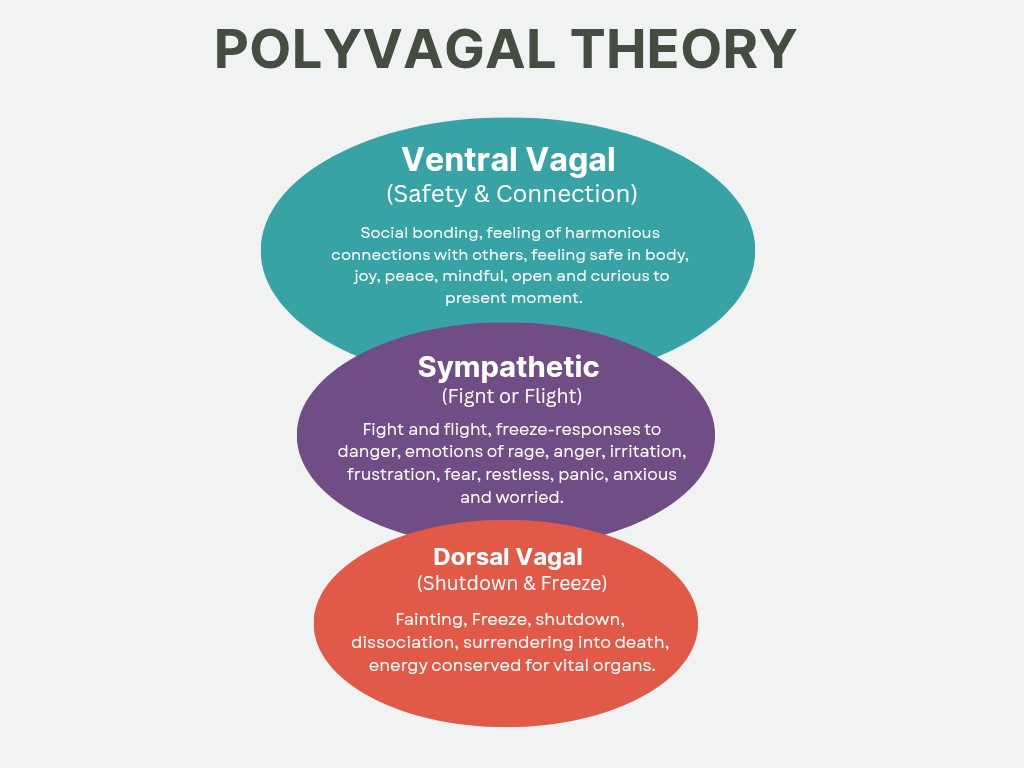
Polyvagal Theory helps us understand how our nervous system shapes our emotions, behaviors, relationships, and even physical health. When we understand it, we stop blaming ourselves—and start regulating ourselves.
Let’s explore this powerful framework and how it connects to modern wellness.
What Is Polyvagal Theory?
Polyvagal Theory explains how the autonomic nervous system (ANS) responds to safety and danger. Traditionally, we understood the ANS as having two branches:
• Sympathetic (fight or flight)
• Parasympathetic (rest and digest)
But Stephen Porges introduced a more nuanced understanding. He proposed that the vagus nerve—the main nerve of the parasympathetic system—has two distinct branches, creating three states instead of two.
These three states influence how we experience life.
The Three Nervous System States
1. Ventral Vagal State (Safety & Connection)
This is the “regulated” state. When we feel safe, supported, and connected, we are in the ventral vagal state.
In this state:
• We feel calm yet energized
• We connect easily with others
• We think clearly
• Digestion and immunity function well
• We experience emotional balance
This is the foundation of true wellness.
2. Sympathetic State (Fight or Flight)
When the brain perceives danger, it activates the sympathetic system.
In this state:
• Heart rate increases
• Muscles tense
• Stress hormones rise
• We feel anxious, irritated, restless, or hyper-alert
This state is not “bad.” It is protective. The problem arises when we stay here chronically—due to work stress, relationship issues, social media overload, financial pressure, or unresolved trauma.
Chronic sympathetic activation contributes to:
• Anxiety disorders
• High blood pressure
• Digestive issues
• Sleep disturbances
• Hormonal imbalance
Sound familiar in modern society?
3. Dorsal Vagal State (Shutdown & Freeze)
If the system perceives extreme threat or overwhelm, it shifts into dorsal vagal shutdown.
In this state:
• We feel numb
• Disconnected
• Depressed
• Exhausted
• Unmotivated
This is the body’s survival response when fight or flight feels impossible.
Many people experiencing burnout or depression are not “lazy.” They may be in dorsal vagal shutdown.
Understanding this changes everything in how we approach wellness.
The Nervous System and Wellness
Wellness is not just about green smoothies, gym routines, or skincare rituals. It begins with nervous system regulation.

You can meditate daily, eat organic food, and still feel dysregulated if your nervous system does not feel safe.
True wellness means:
• Feeling safe in your body
• Experiencing emotional resilience
• Having energy without anxiety
• Being able to connect meaningfully
Polyvagal Theory gives us a biological explanation for why connection, touch, breathwork, and safety are essential—not optional.
The Role of Safety in Healing
According to Polyvagal Theory, the nervous system constantly scans the environment for cues of safety or danger. This process is called neuroception—it happens automatically, outside conscious awareness.
Your body is always asking: “Am I safe?”
If the answer is no—even subtly—your body shifts into protection mode.
This is why:
• Harsh self-talk triggers stress
• Toxic environments cause fatigue
• Emotional invalidation leads to shutdown
• Social isolation increases anxiety
Wellness begins when we create environments—internal and external—that signal safety.
Polyvagal Theory and Holistic Living
Holistic living means caring for mind, body, and soul as one integrated system. Polyvagal Theory supports this integrative perspective.
Let’s explore how.
1. Breathwork
Slow, rhythmic breathing stimulates the vagus nerve, bringing the body into ventral vagal safety.
Practices like:
• 4-6 breathing
• Box breathing
• Humming or chanting
These are not just relaxation techniques. They are biological regulation tools.
2. Social Connection
Eye contact, warm tone of voice, smiling faces—these are vagal cues of safety.
That’s why meaningful conversations feel healing.
Isolation dysregulates. Connection regulates.
Wellness is relational.
3. Mindfulness & Meditation
Mindfulness helps increase awareness of nervous system states.
Instead of saying: “I am anxious.”
You begin to say: “My nervous system is activated.”
This subtle shift reduces shame and increases self-compassion.
4. Movement
Gentle movement like yoga, walking, or stretching helps release stored sympathetic energy.
Trauma-informed yoga, in particular, aligns beautifully with Polyvagal principles—prioritizing choice, safety, and body awareness.
5. Self-Compassion
When you understand Polyvagal Theory, you stop judging yourself for your responses.
Anxiety is not weakness. Shutdown is not laziness. Irritability is not failure.
They are states.
And states can shift.
Polyvagal Theory and Mental Health
Modern mental health struggles—burnout, anxiety, depression—can often be understood as nervous system dysregulation.

Healing, therefore, is not just cognitive. It is physiological.
Therapies that integrate Polyvagal principles focus on:
• Co-regulation (feeling safe with another person)
• Body awareness
• Gradual exposure to stressors
• Emotional attunement
Healing is relational and embodied.
Practical Tools for Daily Regulation
If you want to integrate Polyvagal Theory into your wellness routine, try:
1. Morning sunlight exposure
2. Slow breathing for 5 minutes daily
3. Cold water splash on the face
4. Journaling emotional states without judgment
5. Safe social interaction daily
6. Reducing overstimulation (screen detox)
7. Gentle movement instead of intense workouts when overwhelmed
These simple practices regulate the vagus nerve and support holistic balance.
Why This Matters Today
We live in a hyperconnected yet emotionally disconnected world. Chronic stress has become normalized. Hustle culture glorifies sympathetic activation. Burnout is worn like a badge of honor.
Polyvagal Theory reminds us:
Safety is productive. Rest is intelligent. Connection is medicine.
True wellness is not about pushing harder. It is about regulating smarter.
Final Thoughts
Polyvagal Theory bridges neuroscience and holistic wellness. It validates what ancient healing traditions always emphasized—breath, connection, rhythm, safety.
When we understand our nervous system, we reclaim our power.
Instead of asking: “What’s wrong with me?”
We begin asking: “What does my nervous system need right now?”
And that question alone can transform the way we live, work, heal, and connect.
Wellness is not about perfection. It is about regulation. It is about safety. It is about coming home to your body.
And that is where true healing begins.
 Holistic Living with Dr.Deepti
Leave a comment