In today’s fast-paced world, stress has become almost “normal.” Deadlines, financial pressure, career growth, relationships, social media comparison — everything adds up. But what most people don’t realize is that stress is not just emotional. It is deeply hormonal.
Your body doesn’t know the difference between a real threat (like danger) and a psychological one (like overthinking). In both cases, it activates the same hormonal response system. Let’s understand how stress and hormones are connected — and why this connection affects your weight, skin, mood, gut health, and overall wellness.
What Happens in the Body During Stress?
When you feel stressed, your brain activates the HPA axis (Hypothalamic-Pituitary-Adrenal axis). This system controls your stress hormones.
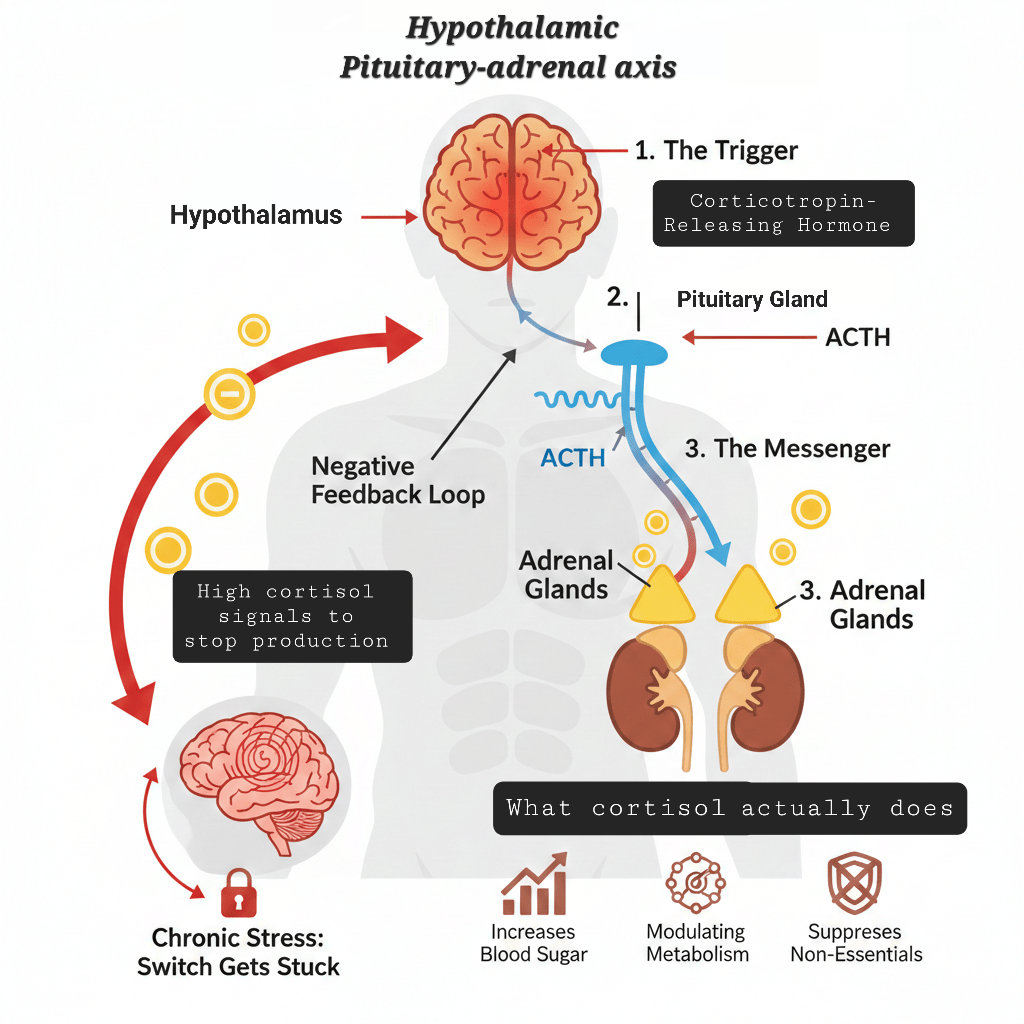
Here’s what happens step by step:
1. The hypothalamus signals that you’re under stress.
2. The pituitary gland sends a message to the adrenal glands.
3. The adrenal glands release stress hormones — mainly cortisol and adrenaline.
This is called the “fight or flight” response.
Short-term stress is actually helpful. It keeps you alert, focused, and ready to act. But when stress becomes chronic (daily overthinking, anxiety, burnout), hormone levels stay elevated — and that’s where problems begin.
Cortisol: The Main Stress Hormone
Cortisol plays a vital role in:
● Regulating blood sugar
● Controlling inflammation
● Managing metabolism
● Influencing sleep cycles
● Supporting memory and alertness
However, chronically high cortisol can lead to:
1. Weight Gain (Especially Belly Fat)
High cortisol increases blood sugar and insulin resistance. It also triggers cravings for sugary and high-carb foods. Over time, this leads to abdominal fat accumulation.
2. Skin Issues
Elevated cortisol:
● Increases oil production → Acne breakouts
● Weakens skin barrier → Sensitivity
● Increases inflammation → Redness & flare-ups
● Slows collagen production → Premature aging
Stress is one of the biggest hidden triggers behind adult acne and pigmentation.
3. Hair Fall
Chronic stress pushes hair follicles into a resting phase (telogen effluvium), leading to noticeable hair shedding.
4. Hormonal Imbalance in Women
High cortisol disrupts:
● Estrogen
● Progesterone
● Thyroid hormones
This may cause irregular periods, PMS, fatigue, mood swings, and even PCOS-like symptoms.
Stress & Insulin: The Blood Sugar Connection
When cortisol rises, it tells your body to release more glucose (sugar) into the bloodstream for quick energy.
If stress is constant:
● Blood sugar stays elevated
● Insulin increases
● Fat storage increases
● Energy crashes become frequent
This explains why many people feel tired yet wired, and crave sugar during stressful days.
Over time, chronic stress can contribute to metabolic issues and increase the risk of type 2 diabetes.
Stress & Thyroid Hormones
Your thyroid controls metabolism. Chronic stress suppresses thyroid function in two ways:
1. Reduces conversion of T4 to active T3 hormone.
2. Increases reverse T3 (inactive form).
Symptoms may include:
● Fatigue
● Weight gain
● Hair thinning
● Brain fog
● Low mood
Many people try strict dieting and intense workouts, but if stress remains high, the thyroid slows down — making weight loss harder.
Stress & Reproductive Hormones
Your body prioritizes survival over reproduction. So when stress levels are high, reproductive hormones are suppressed.
In women:
● Irregular cycles
● Missed periods
● Low progesterone
● Reduced fertility
In men:
● Lower testosterone
● Reduced muscle growth
● Low libido
This is why managing stress is crucial for hormonal balance.
Stress & Gut Hormones
There is a strong connection between the gut and the brain — known as the gut-brain axis.
Chronic stress:
● Alters gut microbiome
● Increases gut inflammation
● Reduces nutrient absorption
● Triggers IBS symptoms
Since the gut produces about 90% of serotonin (the “happy hormone”), stress-related gut issues can also worsen mood and anxiety.
The Vicious Cycle: Stress Feeds Itself
Here’s the dangerous loop:
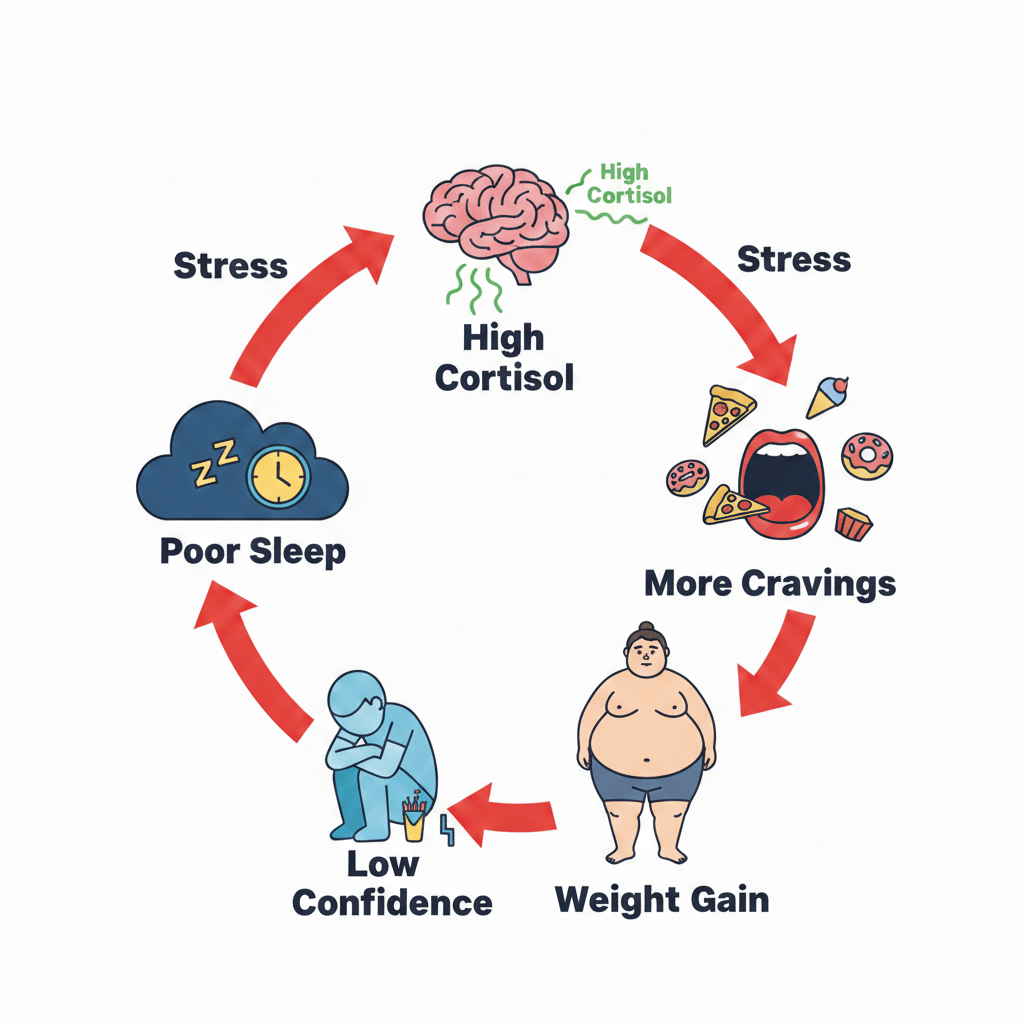
Stress → High cortisol → Poor sleep → More cravings → Weight gain → Low confidence → More stress
Or
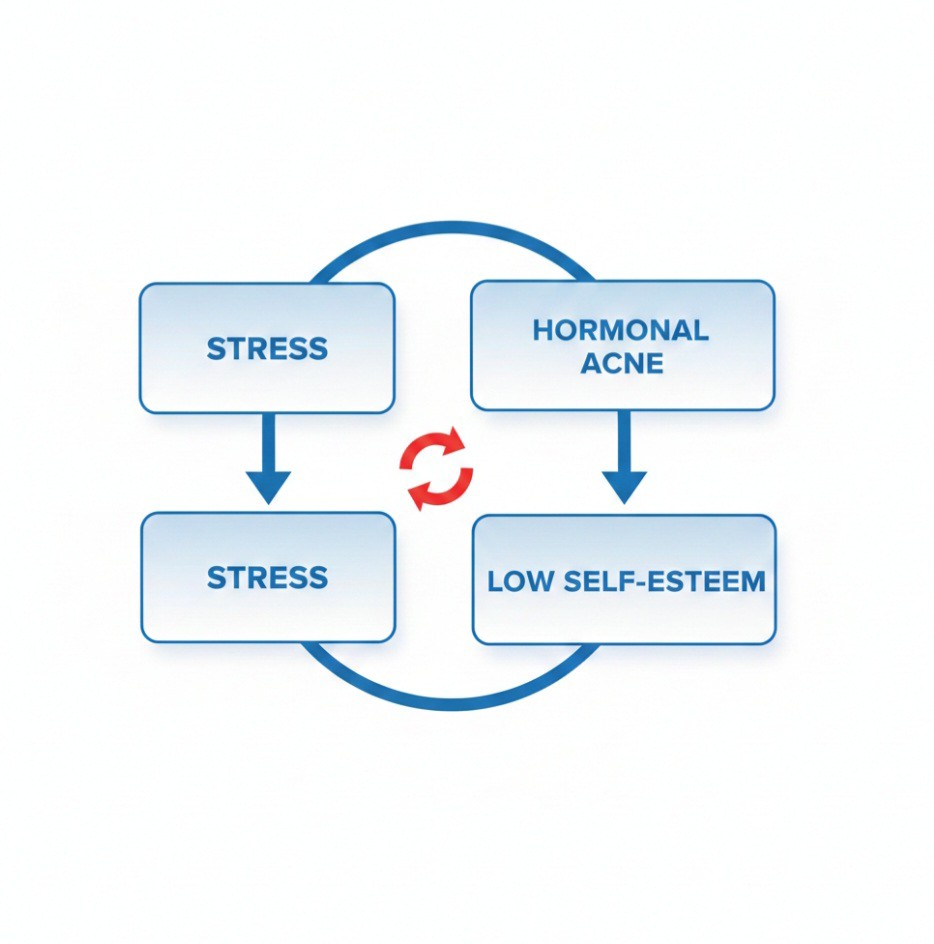
Stress → Hormonal acne → Low self-esteem → More stress
Breaking this cycle requires conscious hormonal regulation — not just skincare, dieting, or productivity hacks.
How to Balance Stress Hormones Naturally
The goal is not to eliminate stress completely. The goal is to regulate it.
1. Prioritize Sleep
7–8 hours of quality sleep lowers cortisol and balances insulin. Avoid screens 1 hour before bed.
2. Strength Training & Walking
Moderate exercise lowers cortisol over time. Avoid excessive cardio during high-stress phases.
3. Protein-Rich Diet
Protein stabilizes blood sugar and reduces stress cravings.
4. Breathwork & Meditation
Deep breathing activates the parasympathetic nervous system (rest & digest mode).
Even 5–10 minutes daily makes a difference.
5. Reduce Caffeine on Stressful Days
Too much caffeine spikes cortisol further.
6. Journaling & Mindset Work
Unprocessed emotions keep stress hormones elevated. Writing helps release mental clutter.
Final Thoughts
Stress is not just “mental.” It is hormonal. It affects your metabolism, skin, hair, mood, reproductive health, and long-term wellness.
Instead of blaming yourself for weight gain, acne, fatigue, or low productivity — ask:
Is my stress hormone imbalance the real reason?
True glow, fat loss, and confidence begin with nervous system regulation.
Manage stress. Balance hormones. Protect your future health.
 Holistic Living with Dr.Deepti
Leave a comment