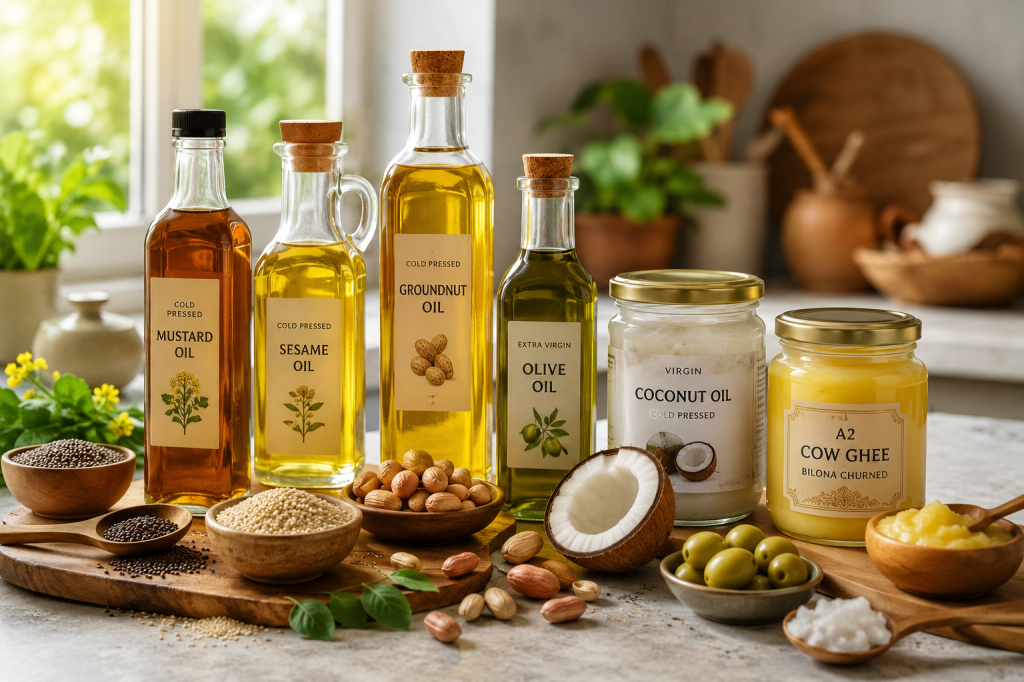
Walk into any supermarket today, and you’ll find shelves packed with cooking oils and different types of ghee. Labels such as “cold-pressed,” “wood-pressed,” “organic,” “virgin,” “refined,” and “A2 ghee” can leave consumers confused about what is actually healthy.
The truth is that no single oil is perfect for everyone. The healthiest choice depends on how the oil is processed, its nutritional profile, and how you use it in your daily cooking.
Understanding Different Types of Oils
Cold-Pressed Oils
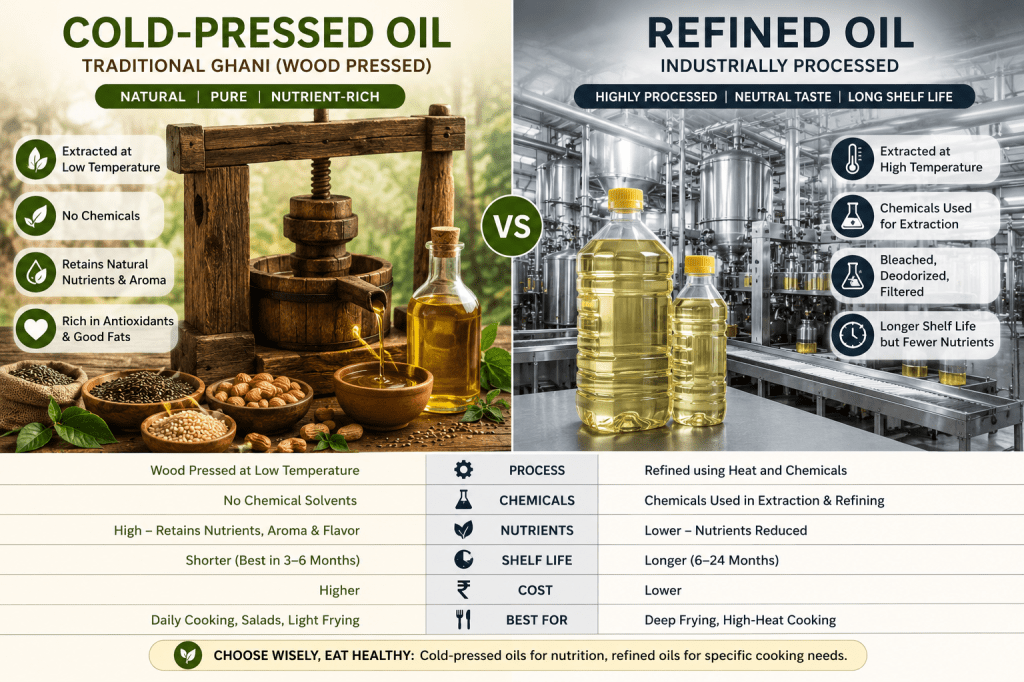
Cold-pressed oils are extracted by mechanically pressing seeds, nuts, or fruits without excessive heat. This method helps preserve natural nutrients, antioxidants, aroma, and flavor.
Common cold-pressed oils include:
● Groundnut oil
● Mustard oil
● Sesame oil
● Coconut oil
Because these oils undergo minimal processing, they retain more of their natural goodness compared to heavily processed oils.
Refined Oils
Refined oils undergo multiple processing steps including heating, bleaching, and deodorizing. These processes improve shelf life and create a neutral taste, but they may also reduce certain naturally occurring nutrients and antioxidants.
Common refined oils include:
● Sunflower oil
● Soybean oil
● Rice bran oil
● Refined groundnut oil
While refined oils are widely used and convenient, they are generally more processed than cold-pressed alternatives.
Virgin and Extra Virgin Oils
The term “virgin” usually refers to oils extracted without chemical processing. Extra virgin olive oil is one of the most popular examples and is known for its heart-friendly monounsaturated fats and antioxidants.
Extra virgin olive oil is ideal for:
● Salad dressings
● Dips
● Light cooking
● Low to medium-heat cooking
Which Cooking Oils Are Considered Healthier?
Mustard Oil
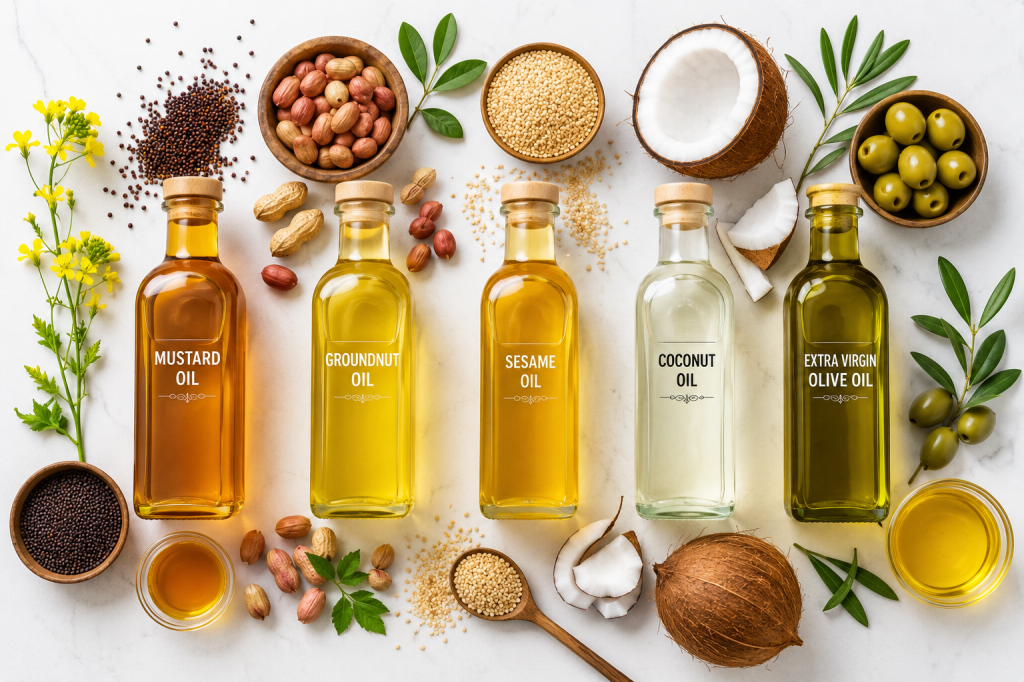
Mustard oil has been used in Indian households for generations. It contains omega-3 fatty acids and has a strong, distinctive flavor.
Benefits:
● Rich in healthy fats
● Suitable for traditional Indian cooking
● Good stability during cooking
Best for:
● Curries
● Vegetables
● Fish preparations
Groundnut Oil
Groundnut oil is a popular choice due to its balanced fat composition and mild flavor.
Benefits:
● Contains vitamin E
● Suitable for high-heat cooking
● Neutral taste
Best for:
● Stir-frying
● Daily cooking
● Frying
Sesame Oil
Sesame oil is rich in antioxidants and has been used in Ayurvedic and traditional cuisines for centuries.
Benefits:
● Contains natural antioxidants
● Distinct flavor
● Good nutritional profile
Best for:
● South Indian dishes
● Stir-fries
● Traditional recipes
Coconut Oil
Coconut oil contains medium-chain triglycerides (MCTs), which are metabolized differently from many other fats.
Benefits:
● Stable for cooking
● Traditional choice in many coastal regions
● Pleasant flavor
Best for:
● Moderate-heat cooking
● South Indian cuisine
● Baking
Olive Oil
Olive oil is often considered one of the healthiest oils due to its high monounsaturated fat content.
Benefits:
● Supports heart health
● Rich in antioxidants
● May help reduce inflammation
Best for:
● Salads
● Light sautéing
● Mediterranean-style cooking
Understanding Ghee
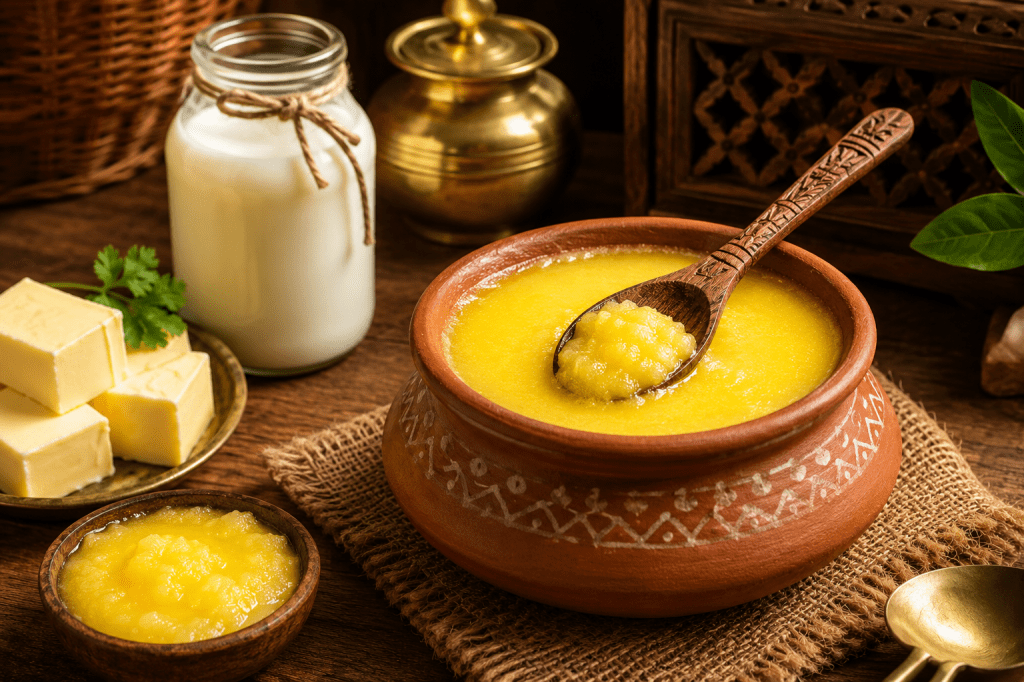
Ghee has been an integral part of Indian cuisine and traditional wellness practices for centuries. Contrary to popular belief, moderate consumption of ghee can be part of a balanced diet.
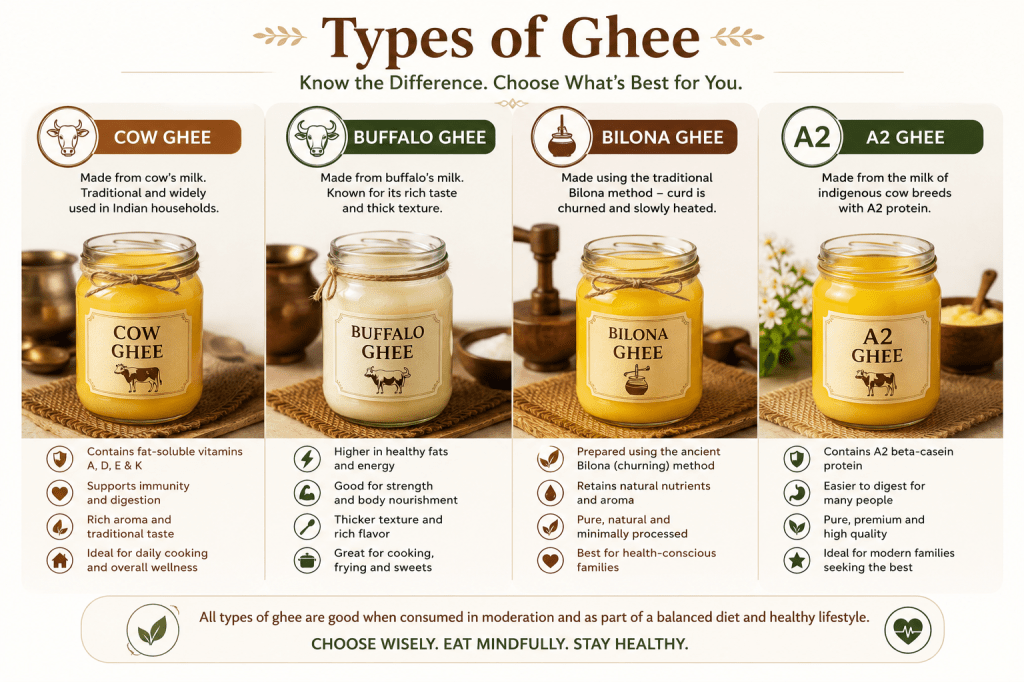
Cow Ghee
Cow ghee is typically golden yellow and has a pleasant aroma.
Benefits:
● Contains fat-soluble vitamins
● Rich flavor
● Traditional household choice
Buffalo Ghee
Buffalo ghee has a thicker texture and a creamier appearance.
Benefits:
● Rich taste
● Higher fat content
● Suitable for traditional cooking
Bilona Ghee
Bilona ghee is made using a traditional method involving curd fermentation, churning, and slow heating.
Benefits:
● Traditional preparation
● Rich flavor profile
● Minimal processing
A2 Ghee
A2 ghee is produced from the milk of indigenous cow breeds that predominantly contain A2 beta-casein protein.
Benefits:
● Premium product
● Traditional source milk
● Popular among health-conscious consumers
Is Ghee Healthier Than Oil?
This is one of the most common questions.
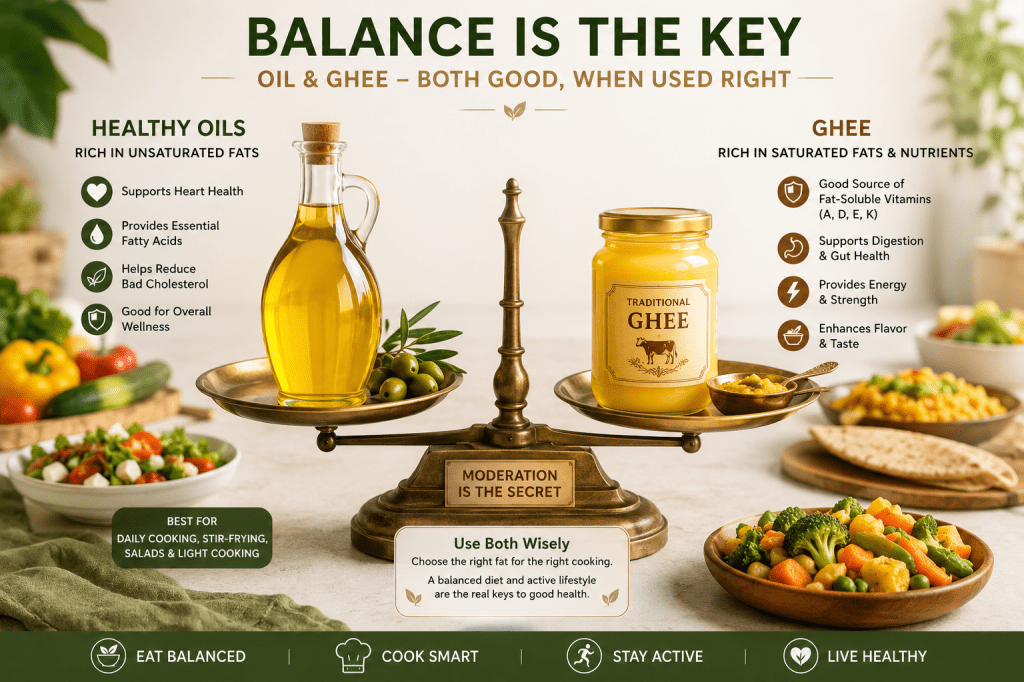
The answer is that both can be healthy when used appropriately.
Ghee:
● Contains saturated fats
● Provides fat-soluble vitamins
● Adds flavor and satiety
Healthy oils:
● Provide unsaturated fats
● Support heart health
● Offer different nutritional benefits
Instead of choosing one over the other, many nutrition experts recommend using a combination of both in moderation.
How to Choose the Best Oil for Your Home
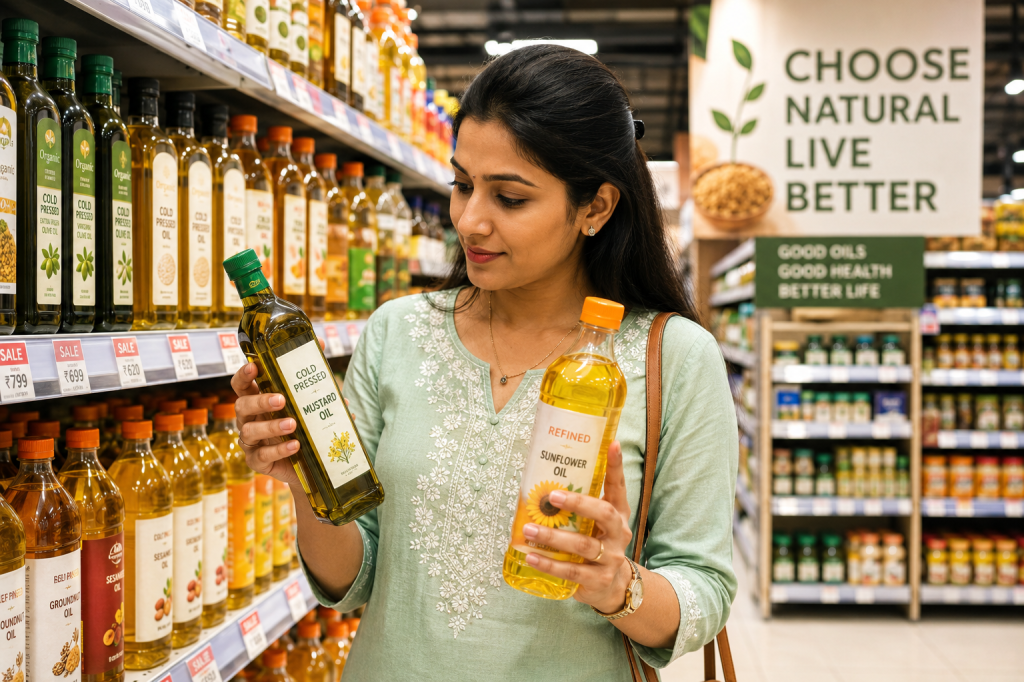
1. Prefer minimally processed oils whenever possible.
2. Choose cold-pressed oils for everyday cooking.
3. Rotate between different oils to obtain a variety of fatty acids.
4. Avoid repeatedly reheating oil.
5. Match the oil to the cooking method.
6. Use ghee in moderation as part of a balanced diet.
7. Read ingredient labels carefully and avoid misleading marketing claims.
Common Myths
Myth 1: Expensive Oils Are Always Better
Price does not always determine nutritional quality. The processing method matters more.
Myth 2: Refined Oil Is Toxic
Refined oils are not inherently toxic, but they are more processed and may contain fewer natural compounds than cold-pressed alternatives.
Myth 3: Ghee Causes Heart Disease
Current evidence suggests that overall dietary patterns, lifestyle, and quantity consumed are more important than blaming a single food.
Final Verdict

For most households, a combination of cold-pressed mustard oil, groundnut oil, sesame oil, coconut oil, and moderate amounts of quality ghee can provide both flavor and nutritional diversity.
Rather than searching for a single “super oil,” focus on choosing minimally processed products, maintaining variety, and consuming all fats in moderation.
Your health is shaped not by one ingredient but by your overall eating habits, physical activity, sleep, and lifestyle choices. Making informed choices about oils and ghee is simply one step toward better long-term health.
Quick recommendation for Indian households:
Cold-pressed mustard oil, groundnut oil, or sesame oil for daily cooking, along with moderate use of traditional ghee, is generally a balanced approach for most healthy adults. If you have specific medical conditions such as heart disease, high cholesterol, or liver disorders, consult a registered dietitian or healthcare professional for personalized advice.
 Holistic Living with Dr.Deepti
Leave a comment