Polycystic Ovary Syndrome, commonly known as PCOS, has become increasingly common among women due to modern lifestyle changes, stress, lack of physical activity, and unhealthy eating habits. While genetics can play a role, diet and lifestyle strongly influence the development and severity of PCOS symptoms. Many women do not realize that daily food choices can directly affect hormones, metabolism, insulin levels, and body weight, eventually contributing to hormonal imbalance and reproductive health issues.
Understanding the relationship between unhealthy eating habits, weight gain, and PCOS is important for prevention and long-term health management.
What is PCOS?
PCOS is a hormonal disorder that affects women of reproductive age. It is characterized by irregular periods, increased androgen levels, ovarian cysts, acne, excessive facial hair, hair fall, mood swings, and weight gain. One of the most common underlying causes of PCOS is insulin resistance, which is heavily influenced by diet and lifestyle.
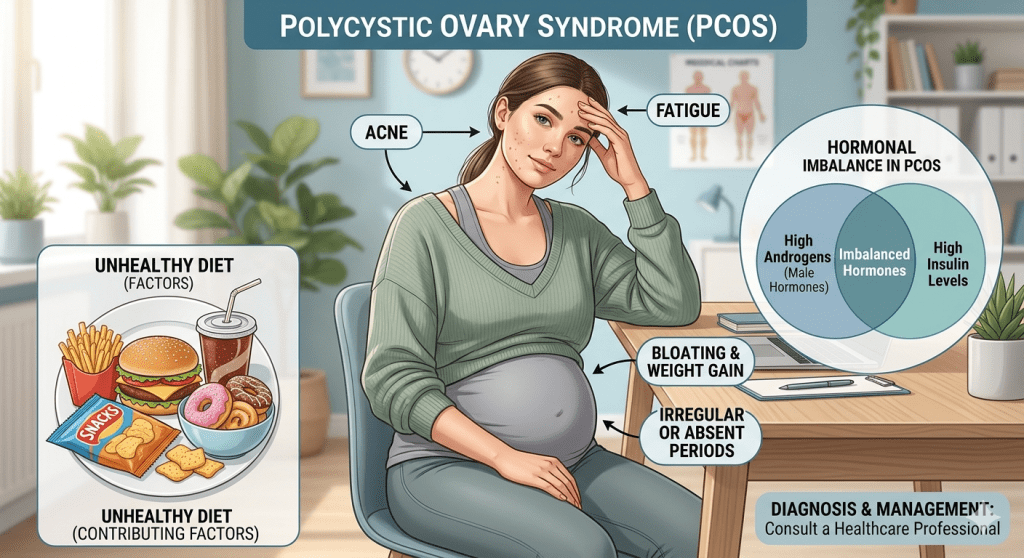
Although PCOS is a medical condition, unhealthy eating habits can worsen hormonal imbalance and increase the risk of developing symptoms over time.
How Unhealthy Eating Habits Affect Hormones
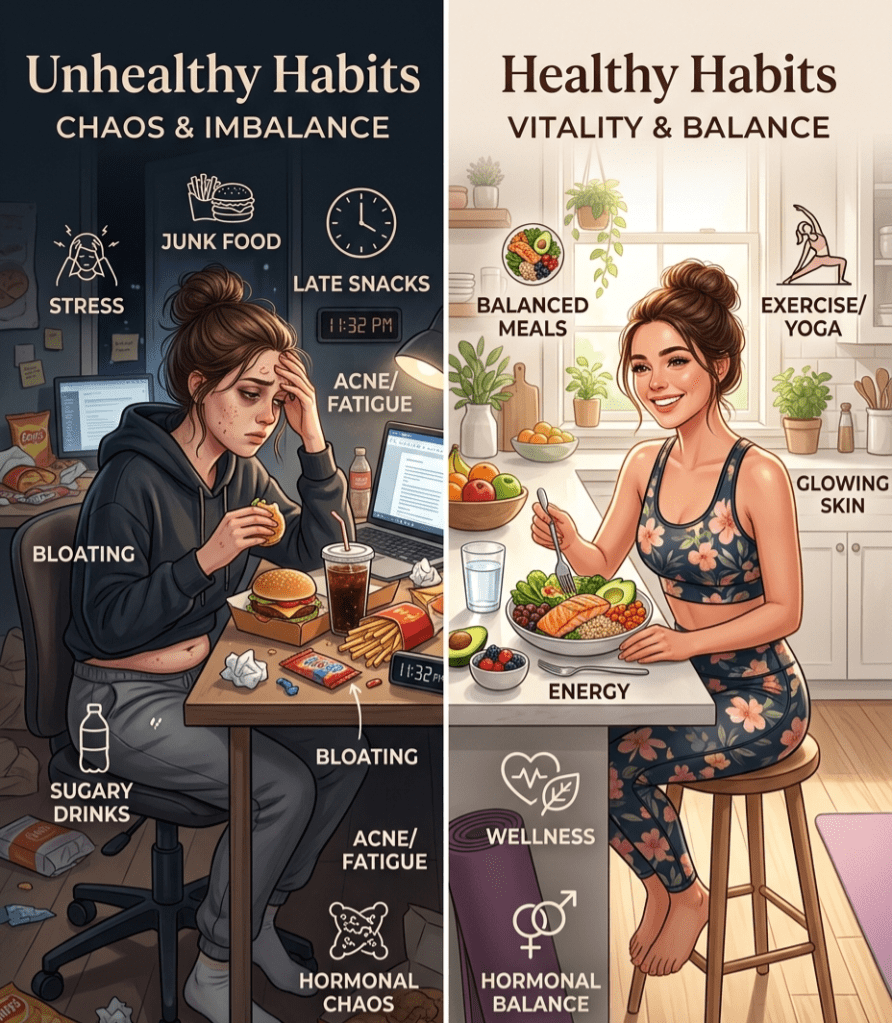
The body’s hormones work like messengers that regulate metabolism, appetite, mood, reproduction, and energy levels. When eating habits become unhealthy, these hormonal signals get disrupted.
Frequent consumption of processed foods, sugary drinks, refined carbohydrates, fried foods, and excessive junk food causes sudden spikes in blood sugar levels. In response, the body releases large amounts of insulin to control the sugar.
Over time, repeated insulin spikes make the body less sensitive to insulin, leading to insulin resistance. This condition is one of the biggest contributors to PCOS.
The Link Between Insulin Resistance and PCOS
Insulin resistance means the body cannot use insulin effectively. As a result, the pancreas produces even more insulin to compensate. High insulin levels stimulate the ovaries to produce excess male hormones called androgens.
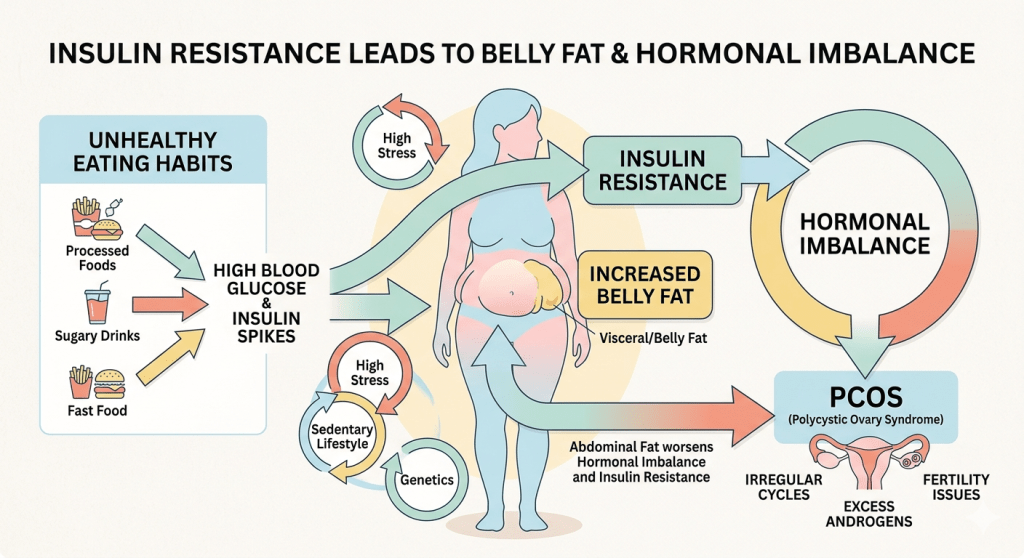
These elevated androgen levels interfere with ovulation and menstrual cycles, leading to symptoms commonly seen in PCOS.
High insulin also encourages fat storage, especially around the abdomen, causing weight gain and difficulty losing weight. This creates a harmful cycle:
● Unhealthy eating increases insulin levels
● Insulin resistance develops
● Hormonal imbalance worsens
● Weight gain increases
● Excess weight further worsens insulin resistance and PCOS symptoms
Foods That Commonly Contribute to Hormonal Imbalance

Certain eating habits may increase inflammation and hormonal disruption in the body:
Excess Sugar Consumption
Sugary beverages, desserts, candies, and packaged snacks rapidly increase blood sugar levels. Frequent sugar intake contributes to insulin resistance and increased fat storage.
Refined Carbohydrates
White bread, pastries, noodles, and processed cereals lack fiber and digest quickly, causing sudden blood sugar spikes.
Processed and Fried Foods
Fast food and deep-fried items often contain unhealthy fats, preservatives, and excess sodium, which may increase inflammation and metabolic dysfunction.
Skipping Meals
Irregular eating patterns can disturb metabolism and hormone regulation. Skipping meals may also lead to overeating later in the day.
Emotional Eating
Stress-related eating often leads to excessive consumption of comfort foods rich in sugar and unhealthy fats. Emotional eating can increase both weight gain and hormonal stress.
How Weight Gain Worsens Hormonal Imbalance
Excess body fat is not only a storage tissue; it also acts like an endocrine organ that influences hormones. Increased fat accumulation, especially around the belly, can worsen insulin resistance and inflammation.
Fat tissue may also affect estrogen levels, creating further hormonal imbalance. This makes ovulation irregular and increases the severity of PCOS symptoms.
Women with PCOS often find it harder to lose weight because hormonal imbalance slows metabolism and increases cravings for carbohydrates and sugary foods.
The Role of Inflammation
Unhealthy eating habits can create chronic low-grade inflammation in the body. Inflammation affects hormonal communication and insulin sensitivity.
Inflammatory foods combined with lack of sleep, stress, and sedentary lifestyle can worsen symptoms like:
● Acne
● Fatigue
● Bloating
● Mood swings
● Weight gain
● Irregular periods
Reducing inflammation through healthy food choices is an important step in managing PCOS naturally.
Healthy Eating Habits That Support Hormonal Balance
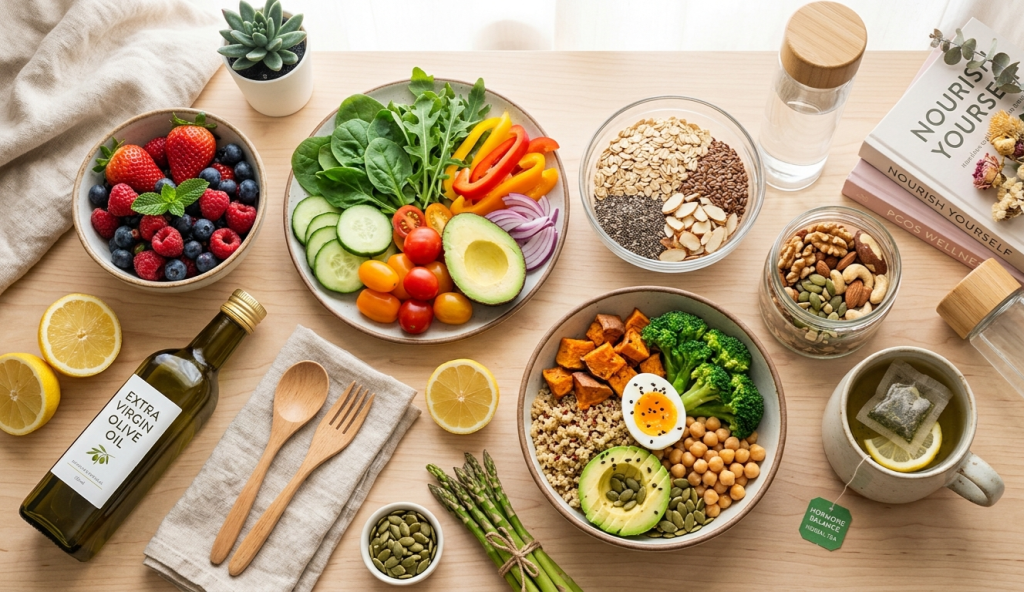
Improving eating habits can significantly help regulate hormones and manage PCOS symptoms.
Eat Balanced Meals
Include protein, healthy fats, fiber, and complex carbohydrates in every meal to stabilize blood sugar levels.
Choose Whole Foods
Fresh fruits, vegetables, nuts, seeds, legumes, and whole grains provide nutrients that support hormonal health.
Increase Fiber Intake
Fiber helps slow sugar absorption and improves insulin sensitivity.
Stay Hydrated
Proper hydration supports metabolism and digestion.
Reduce Processed Foods
Limiting sugary snacks, soft drinks, and junk food helps control insulin spikes and inflammation.
Eat Mindfully
Eating slowly and recognizing hunger cues can prevent overeating and emotional eating patterns.
Lifestyle Factors Along With Diet
Diet alone is not the only factor. Lack of exercise, poor sleep, high stress, and sedentary habits also contribute to hormonal imbalance.
Regular movement, strength training, walking, yoga, and stress management techniques can improve insulin sensitivity and overall hormonal health.
Adequate sleep is equally important because sleep deprivation affects hunger hormones and increases cravings for unhealthy foods.
Final Thoughts

Polycystic Ovary Syndrome is strongly connected to lifestyle and metabolic health. Unhealthy eating habits can gradually lead to insulin resistance, weight gain, inflammation, and hormonal imbalance, all of which contribute to the development and worsening of PCOS symptoms.
The good news is that small, consistent lifestyle changes can make a significant difference. Choosing nutritious foods, maintaining regular physical activity, managing stress, and improving sleep habits can help regulate hormones naturally and support long-term wellbeing.
PCOS management is not about extreme dieting or perfection. It is about creating sustainable habits that nourish the body, support hormonal balance, and improve overall health from within.
Your hormones reflect your lifestyle choices. Start nourishing your body with healthier habits today and take one step closer to balanced hormones and better wellbeing. Follow for more wellness and women’s health insights.
 Holistic Living with Dr.Deepti
Leave a comment